

Making the right decisions does not stop at settlement. When you purchase a rent roll, you also need to think long term and consider how it will fit with your broader business. In part two of our series on hidden risks in rent roll acquisitions, we look beyond the paperwork and explain why the property management team is a critical part of the deal.
When buyers assess a rent roll acquisition, most attention is given to management agreements, income multiples, retention rates and due diligence. However, one of the most significant risks to the long-term success of a transaction is often overlooked – the transition of the existing property management team.
The relationships between property managers and landlords are built over many years. In many cases, landlords remain with an agency because of the individual managing their investment rather than the agency itself. Accordingly, careful planning around staff retention, employment arrangements and post-settlement protections is just as important as reviewing the management agreements.
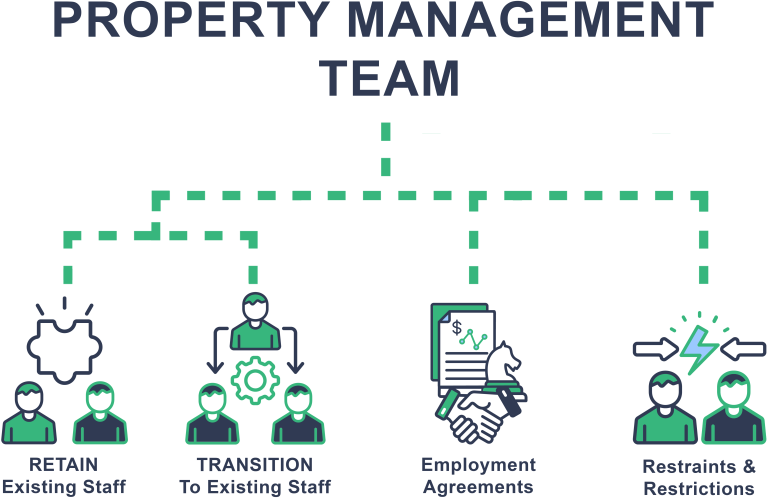
1. Should You Acquire the Existing Property Management Team?
One of the first strategic decisions a purchaser must make is whether to retain the vendor’s property management staff or transition the portfolio to an existing team. There is no single correct answer. The decision should be based on the composition of the rent roll, the quality of the staff and the purchaser’s existing operational capacity.
Retaining Existing Staff
If you choose to retain the existing property managers, there are many significant benefits. These can include, but are not limited to:
- Continuity for landlords and tenants
- Preservation of long-standing relationships
- Reduced disruption following settlement
- Improved landlord retention during the transition period
- Valuable operational knowledge of the portfolio
However, retaining staff also presents risks. Existing employees may have loyalties to the vendor which may not align with your culture or systems. This can lead to existing staff leaving shortly after settlement and taking valuable relationships with them.
Transitioning to Your Existing Team
If your property management team is a successful one, integrating the acquired portfolio may be the preferred option. It can improve operational efficiency and eliminate duplicated roles. You should, however, recognise that removing familiar property managers immediately after settlement may increase the risk of landlord dissatisfaction and appointment cancellations if the transition is not carefully managed.
Every acquisition should therefore include a detailed transition strategy rather than assuming that staff will either remain indefinitely or be easily replaced.
2. Review Existing Employment Agreements Before Settlement
If you intend on retaining staff, its important you do your due diligence on the employment arrangements, not just on the management agreements. Many purchasers spend considerable time reviewing management agreements but fail when doing the same for transitioning staff.
This can create significant legal and commercial risks. Before settlement, ensure you seek copies of the following for each employee:
- Employment agreement
- Position description
- Remuneration arrangements (including bonuses and commissions)
- Leave entitlements
- Confidentiality obligations
- Intellectual property provisions
- Restraint clauses
Understanding these arrangements allows you to determine:
- Whether the employee’s current agreement adequately protects the business
- Whether restrictive covenants are enforceable
- Whether the employee can simply resign and immediately compete
If staff are moving across it is also a good opportunity to put updated employment agreements in place so they properly reflect your business, your expectations, and the protections you need.
A properly drafted employment agreement should do far more than record salary and working hours – it should actively protect the goodwill being acquired as part of the transaction.
3. Protecting the Goodwill: Appropriate Restraints and Restrictions
The goodwill in a rent roll is largely derived from the ongoing relationships between landlords and their property manager.
Accordingly, consider implementing robust contractual protections designed to reduce the risk of departing employees taking those relationships elsewhere.
You should make sure any new employment agreements include practical protections that are appropriate for the employee’s role and comply with state employment and restraint of trade laws, including provisions dealing with:
- Confidentiality of landlord information and agency records
- Ownership of client databases and business information
- Restrictions on soliciting landlords, tenants and prospective clients after employment ends
- Restrictions on inducing other employees to leave the business
- Obligations regarding return of documents, passwords and electronic information
These provisions should be carefully tailored to the employee’s role and the legitimate business interests being protected. Overly broad restraints may be difficult to enforce, while narrowly drafted clauses may fail to adequately protect your investment.
The objective is not to prevent fair competition but to protect the goodwill that has been acquired as part of the rent roll purchase.
A Critical Part of Due Diligence
For many buyers, the value of a rent roll lies in the recurring management income. In reality, much of that value is dependent upon the people who manage those relationships every day.
A comprehensive due diligence process should therefore extend beyond the management agreements themselves and include a thorough review of the employment arrangements of key staff, together with a well-planned strategy for retaining talent and protecting the business following settlement.
Ultimately, the success of a rent roll acquisition is determined not only by the quality of the management agreements acquired, but also by the purchaser’s ability to retain the goodwill that supports those agreements long after settlement has occurred.
For assistance with rent roll sales, acquisitions, and transition services, contact Matt Ciallella.
Mobile: 0414 668 972 | Email : matt@mcrrb.com.au